sexta-feira, 11 de outubro de 2013

Música de Embalar: A Tática da Crítica


Não haja dúvidas: Ao governo, fazem-lhe falta estes críticos, maravilhosos taticistas. Se os cortes para 2014 já tivessem sido feitos em 2011, era muito melhor. Ele próprio escusava de pagar os impostos que paga. Os riquíssimos funcionários públicos e os verdadeiramente milionários pensionistas pagariam o que devem, poupando o senhor do assalto fiscal a que foi sujeito. A tática de criticar, concordando, sempre foi uma tática de luta pelo poder, ou então música para embalar bebés.
Marques Mendes "Cortes deviam ter sido feitos em 2011 para evitar assalto fiscal"
O ex-líder do PSD Marques Mendes entende o Orçamento de Estado para 2014 vai conter o “maior corte estrutural de despesa alguma vez feito em Portugal" e que os cortes estruturais na despesa do Estado já deviam ter sido aplicados há três anos.
ECONOMIA
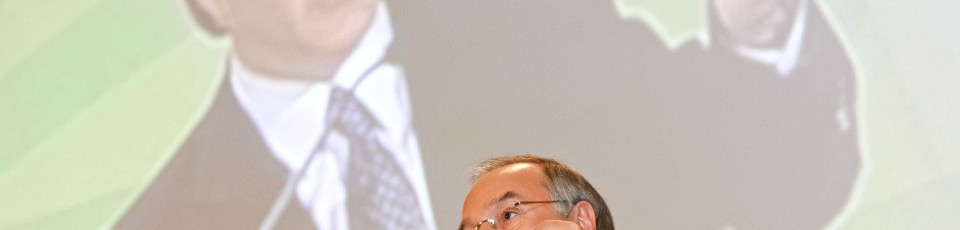
Cortes deviam ter sido feitos em 2011 para evitar assalto fiscal
DR
"Finalmente as prioridades. Chegamos ao terceiro ano do programa de resgate e a realidade é esta: as empresas fizeram os seus ajustamentos. O Estado, esse, só agora começa a fazer o seu. Aquele que foi o grande causador do resgate, o Estado, só agora cumpre a sua tarefa estrutural. Verdadeiramente, somos um País de prioridades invertidas", escreveu hoje Luís Marques Mendes, no artigo de opinião na revista Visão, citado pelo Diário Económico.
PUB
O ex-líder do PSD disse, assim, entender que os cortes estruturais na despesa do Estado já deviam ter começado há três anos.
“Aqui reside o maior erro estratégico do Governo, com consequências para todos. (…) Se estes cortes tivessem sido materializados em 2011 não teria sido necessário recorrer ao verdadeiro assalto fiscal que foi perpetrado este ano. A terapia não teria sido tão recessiva e a economia e o emprego não teriam sofrido de forma tão acentuada os efeitos do brutal aumento de impostos", garantiu o comentador.
Além das críticas proferidas ao atraso na reforma do Estado, Marques Mendes salientou, ainda, o facto de o Orçamento do Estado para 2014 “conter o maior corte estrutural de despesa alguma vez feito em Portugal".
O documento, discutido hoje em Conselho de Ministros e que deverá ser entregue na próxima terça-feira (15 de Outubro) na Assembleia da República, contemplará medidas que prevêem "cortes nas pensões de sobrevivência e da Caixa Geral de Aposentações, cortes nas tabelas salariais da função pública, rescisões de contratos e requalificação de funcionários públicos, cortes em serviços e institutos públicos, entre outras medidas de diminuição da despesa".

quinta-feira, 10 de outubro de 2013

O pensamento transcendente do meu cão

Cheguei agora a casa de um consulta de cirurgia. O Chaplin (meu cão) farejou-me e, por certo, percebeu que vinha do meu veterinário. Ficou com ar preocupado: ele também não gosta desses ambientes.
Mas, agora, está realmente preocupado, o focinho entalado entre as patas, enquanto lhe peço que esteja sossegadinho, que não me incomode.
Está ele a pensar que, quando volta do veterinário, pode não vir melhor, mas nunca vem pior. Que raio de coisa sou eu, a quem os deuses não me protegem dessas leviandades? Sim, que o bicho transcende a sua condição, para pensar numa ordem superiormente estabelecida.
Pois é, para além de o médico me ter mexido numa coisa ruim (afinal de dimensão média) que devia ficar onde estava, tive eu de assinar, em nome da transparência, um documento onde se anunciavam os procedimentos técnicos a que seria sujeito, a taxa de mortalidade naquele hospital para intervenções do mesmo género, etc.
O Chaplin já sabe que "coisa" é um termo que se refere a algo de transcendente. Já categorizou as coisas: por exemplo, "bola" é toda a coisa com que pode brincar.
Não faltará muito para inventar a filosofia, e aí descobrirá que a água é a origem, diacrónica e sincrónica, de todas as coisas. Não é que já não o saiba. Só que, até agora, isso tem sido uma crença verdadeira não justificada, a não ser quando tem sede e me sabe a mim por perto. Ainda ladra para beber.

O Problema? As crianças não são suficientemente selvagens, ou incultas


The problem with education? Children aren't feral enough

The 10-year-old Londoners I took to Wales were proof that a week in the countryside is worth three months in a classroom
belle outdoorsView larger picture
'Instead of being encouraged to observe and explore and think and develop, children are being treated like geese in a foie gras farm.' Illustration by Belle Mellor
What is the best way to knacker a child's education? Force him or her to spend too long in the classroom. An overview of research into outdoor education by King's College London found that children who spend time learning in natural environments "perform better in reading, mathematics, science and social studies". Exploring the natural world "makes other school subjects rich and relevant and gets apathetic students excited about learning".
Fieldwork in the countryside, a British study finds, improves long-term memory. Dozens of papers report sharp improvements in attention when children are exposed to wildlife and the great outdoors. Teenage girls taken on a three-week canoeing trip in the United States remained, even 18 months later, more determined, more prepared to speak out and show leadership, and more inclined to challenge conventional notions of femininity.
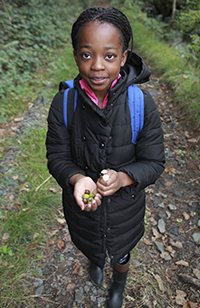
A child holding some acornsA child from south-east London holding some acorns she found on a forest trail in Wales. Photograph: John Russell
Studies of the programmes run by The Wilderness Foundation UK, which takes troubled teenagers into the mountains, found that their self-control, self-awareness and behaviour all improved. Ofsted, the schools inspection service, reports that getting children out of the classroom raises "standards, motivation, personal development and behaviour."
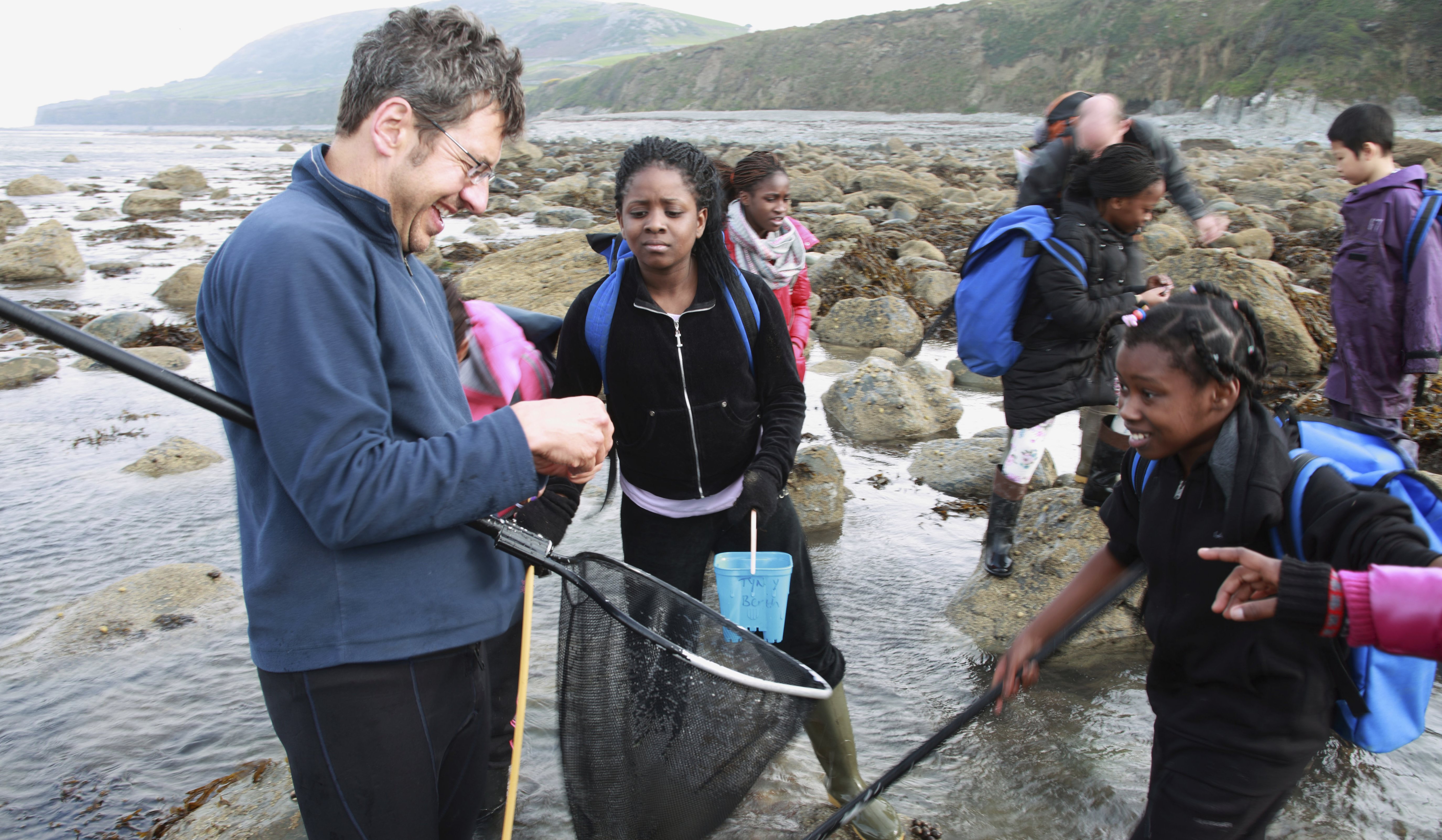
Last week I saw the evidence myself. With the adventure learning charity WideHorizons, I spent two days taking a group of 10-year-olds from a deprived borough in London rockpooling, and roaming the woods in mid-Wales. Many had never been to the countryside before and had never seen the sea.
I was nervous before I met them. I feared that our differences might set us apart. I thought they might be bored and indifferent. But my fears evaporated as soon as we reached the rockpools.
Within a few minutes, I had them picking up crabs and poking anenomes. When I showed that they could eat live prawns out of the net they were horrified, but curiosity and bravado conquered disgust, and one after another they tried them. Raw prawns are as sweet as grapes: some of the children were soon shovelling them into their mouths. I don't think there was anyone in the group who managed not to fall into the water. But no one complained.
In the woods the next day we paddled in a stream, rolled down a hill, ate blackberries, tasted mushrooms, had helicopter races with sycamore keys, explored an ant's nest, broke sticks and collected acorns. Most had never done any of these things before, but they needed no encouragement: the exhilaration with which they explored the living world seemed instinctive. I realised just how little contact they'd had when I discovered that none of them had seen a nettle or knew what happens if you touch it.
But what hit me hardest was this. One boy stood out: he had remarkable powers of observation and intuition. When I mentioned this to his teacher, her reply astonished me: "I must tell him. It's not something he will have heard before." When a child as bright and engaged as this is struggling at school, the problem lies not with the child but with the education system. We foster and reward a narrow set of skills.
The governments of this country accept the case for outdoor learning. In 2006 the Departments for Children and Schools, Culture, and the Environment signed a manifesto which says the following: "We strongly support the educational case for learning outside the classroom. If all young people were given these opportunities we believe it would make a significant contribution to raising achievement." In 2011 the current government published a white paper proposing "action to get more children learning outdoors, removing barriers and increasing schools' abilities to teach outdoors".
So what happened? Massive cuts. The BBC reports that 95% of all outdoor education centres have had their entire local-authority funding cut. Instead of being encouraged to observe and explore and think and develop, children are being treated like geese in a foie gras farm. Confined to the classroom, stuffed with rules and facts, dragooned into endless tests: there could scarcely be a better formula for ensuring that they become bored and disaffected.
George Monbiot rockpooling with children from south-east londonGeorge Monbiot rockpooling with children from south-east London. Photograph: John Russell
When children are demonised by the newspapers, they are often described as feral. But feral is what children should be: it means released from captivity or domestication. Those who live in crowded flats, surrounded by concrete, mown grass and other people's property, cannot escape their captivity without breaking the law. Games and explorations that are seen as healthy in the countryside are criminalised in the cities. Children who have never visited the countryside – 50% in the UK, according to WideHorizons – live under constant restraint.
Why shouldn't every child spend a week in the countryside every term? Why shouldn't everyone be allowed to develop the kind of skills the children I met were learning: rock climbing, gorge scrambling, caving, night walking, ropework and natural history? Getting wet and tired and filthy and cold, immersing yourself, metaphorically and literally, in the natural world: surely by these means you discover more about yourself and the world around you than you do during three months in a classroom. What kind of government would deprive children of this experience?
Twitter: @georgemonbiot. A fully referenced version of this article can be found at Monbiot.com

Austerity pushing Europe into social and economic decline, says Red Cross


Austerity pushing Europe into social and economic decline, says Red Cross

Critique of response to EU debt crisis highlights unemployment, widening poverty gap, and growing risk of social unrest
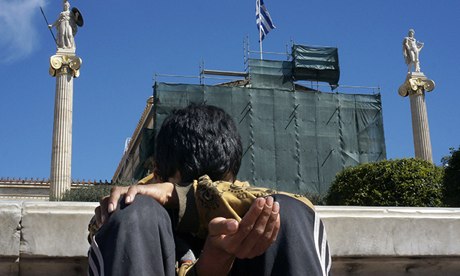
A homeless man begs for money in Athens
A homeless man begs for money in Athens. Photograph: Milos Bicanski/Getty Images
Europe is sinking into a protracted period of deepening poverty, mass unemployment, social exclusion, greater inequality, and collective despair as a result of austerity policies adopted in response to the debt and currency crisis of the past four years, according to an extensive study being published on Thursday.
"Whilst other continents successfully reduce poverty, Europe adds to it," says the 68-page report from the International Federation of Red Cross and Red Crescent Societies. "The long-term consequences of this crisis have yet to surface. The problems caused will be felt for decades even if the economy turns for the better in the near future … We wonder if we as a continent really understand what has hit us."
The damning critique, obtained exclusively by the Guardian, of the policy response to the debt crisis that surfaced in Greece in late 2009 and raised fundamental questions about the viability of the euro single currency, foresees extremely gloomy prospects for tens of millions of Europeans.
Mass unemployment – especially among the young, 120 million Europeans living in or at risk of poverty – increased waves of illegal immigration clashing with rising xenophobia in the host countries, growing risks of social unrest and political instability estimated to be two to three times higher than most other parts of the world, greater levels of insecurity among the traditional middle classes – all combine to make a European future more uncertain than at any time in the postwar era.
"As the economic crisis has planted its roots, millions of Europeans live with insecurity, uncertain about what the future holds. This is one of the worst psychological states of mind for human beings. We see quiet desperation spreading among Europeans, resulting in depression, resignation and loss of hope. Compared to 2009, millions more find themselves queuing for food, unable to buy medicine nor access healthcare. Millions are without a job and many of those who still have work face difficulties to sustain their families due to insufficient wages and skyrocketing prices.
"Many from the middle class have spiralled down to poverty. The amount of people depending on Red Cross food distributions in 22 of the surveyed countries has increased by 75% between 2009 and 2012. More people are getting poor, the poor are getting poorer."
The survey conducted in the first half of this year "mapped" the 28 countries of the EU plus a further 14 in the Balkans, eastern Europe and central Asia.
In the EU, it found that the grave impact of the crisis was not confined to the crisis-ravaged, bailed-out countries of southern Europe and Ireland, but extended to relative European success stories such as Germany and parts of Scandinavia.
Last year the Spanish Red Cross launched a national appeal to help people in Spain, the first ever. Suicides among women in Greece have at least doubled. Many employed in Slovenia have not been paid for months. In France 350,000 people fell below the poverty line from 2008 to 2011. One in five Finns born in 1987 have been treated for psychiatric or mental disorders, associated with the economic slump in Finland in the 1990s.
Despite Germany's vaunted success in avoiding the high levels of unemployment prevalent across much of the EU, a quarter of the country's employed are classified as low-wage earners, almost half of new job contracts since 2008 have been low-paid, flexible, part-time so-called mini-jobs with little security and usually no social benefits. In July last year 600,000 employed in Germany with social insurance did not have enough to live on.
The problems are also affecting Europe's wealthiest societies, such as Denmark and Luxembourg, the study found.
In the Baltic states and Hungary up to 13% of the populations have left in recent years due to economic hardship. The study reports a mounting trend of intra-European migration, mainly from east to west, in search of work.
The jobs crisis is one of the most debilitating issues facing the EU and the eurozone. Of more than 26 million unemployed in the EU, those out of work for longer than a year stands at 11 million, almost double the level of five years ago when the international financial crisis broke out in the US.
The social impact is immense, the study found. In Greece and Spainadult children with families are moving back in with their parents, several generations are living in single households with one breadwinner between them. It is now a common sight to find formerly prosperous middle-class men and women sleeping rough in Milan, Italy's financial capital.
Youth unemployment figures in a quarter of the countries surveyed ranged from 33% to more than 60%. But as destructive to families, the report said, is the soaring jobless levels among 50-64 year-olds which has risen from 2.8 million to 4.6 million in the EU between 2008 and 2012.
"The rate at which unemployment figures have risen in the past 24 months alone is an indication that the crisis is deepening, with severe personal costs as a consequence, and possible unrest and extremism as a risk. Combined with increasing living costs, this is a dangerous combination," the study said.
Despite the perceived success of Germany, Europe's economic engine, the study takes the EU's biggest country to illustrate the widening wealth gap, raising questions about the longevity of the EU's traditional model, the social market economy. According to Germany's Bertelsmann Foundation some 5.5 million Germans have lost their middle-class social status over the past decade and fallen into the ranks of low-income earners while at the same time half a million others made the grade as high-income earners.

MetaPhilosophy (seja lá o que isso for)

Cover image for Vol. 44 Issue 5

Metaphilosophy

© Metaphilosophy LLC and John Wiley & Sons Ltd

Volume 44, Issue 5 Pages 559 - 721, October 2013
The latest issue of Metaphilosophy is available on Wiley Online Library

ARTICLES

The Reliability of Armchair Intuitions (pages 559–578)
Krist Vaesen, Martin Peterson and Bart Van Bezooijen
Article first published online: 6 OCT 2013 | DOI: 10.1111/meta.12060
Philosophy Upside Down? (pages 579–588)
Peter Baumann
Article first published online: 6 OCT 2013 | DOI: 10.1111/meta.12046
Zone Morality (pages 589–603)
David Weissman
Article first published online: 6 OCT 2013 | DOI: 10.1111/meta.12053
Alief and Explanation (pages 604–620)
Graham Hubbs
Article first published online: 6 OCT 2013 | DOI: 10.1111/meta.12056
Primitivism and the Analogy between Colors and Values (pages 621–639)
Hagit Benbaji
Article first published online: 6 OCT 2013 | DOI: 10.1111/meta.12061
Solving Wollheim's Dilemma: A Fix for the Institutional Definition of Art (pages 640–654)
Simon Fokt
Article first published online: 6 OCT 2013 | DOI: 10.1111/meta.12057
The Origins of Walter Benjamin's Concept of Philosophical Critique (pages 655–681)
Alexei Procyshyn
Article first published online: 6 OCT 2013 | DOI: 10.1111/meta.12049
Rorty's Debt to Sellarsian Metaphysics (pages 682–707)
Carl B. Sachs
Article first published online: 6 OCT 2013 | DOI: 10.1111/meta.12054

BOOKS

Review

The Things in Heaven and Earth: An Essay in Pragmatic Naturalism. By John Ryder. New York: Fordham University Press, 2013. Pp. xiii + 327. (pages 708–713)
Lawrence Cahoone
Article first published online: 6 OCT 2013 | DOI: 10.1111/meta.12052

Books Received

Books Received (pages 714–715)
Article first published online: 6 OCT 2013 | DOI: 10.1111/meta.12058

Notes on Contributors

Notes on Contributors (pages 716–717)
Article first published online: 6 OCT 2013 | DOI: 10.1111/meta.12062

Author Index Volume 44 (2013)

Author Index Volume 44 (2013) (pages 718–721)
Article first published online: 6 OCT 2013 | DOI: 10.1111/meta.12059

Political Philosophy

Cover image for Vol. 21 Issue 3

Journal of Political Philosophy

© John Wiley & Sons Ltd


Early View (Online Version of Record published before inclusion in an issue)
THESE EARLY VIEW ARTICLES ARE NOW AVAILABLE ON WILEY ONLINE LIBRARY

Original Articles

Reconceiving Recognition: Towards a Cumulative Politics of Recognition
Tamar Malloy
Article first published online: 7 OCT 2013 | DOI: 10.1111/jopp.12027

terça-feira, 8 de outubro de 2013

Bispos contra cortes nas pensões de sobrevivência

Estão a ir-lhes ao bolso. Muitas instituições de apoio à terceira idade são confessionais. Os idosos pagam com as pensões que recebem. Vejam lá se eles andam dormir.

Matar uma formiga com uma bomba atómica é eficaz... Mas não é eficiente


sexta-feira, 4 de outubro de 2013

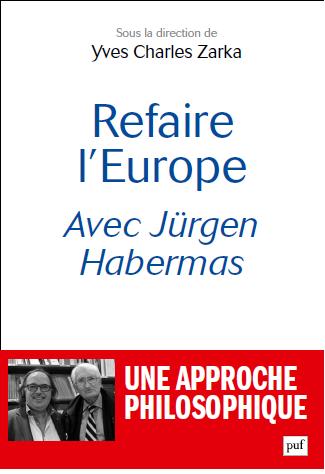
"Refaire l’Europe" avec Jürgen Habermas, Yves Charles Zarka (dir.), Paris, PUF, 2012.


Nous avons le plaisir de vous annoncer la parution d’un ouvrage important:Refaire l’Europe, sous la direction d’Yves Charles Zarka, avec des contributions majeures de Jürgen Habermas. C’est la question centrale de la possibilité d’une Europe démocratique comme solution à la crise actuelle, y compris financière, qui se trouve traitée et discutée.
 refaire l'Europe

Daniela Lapenna: Le pouvoir de vie et de mort, Paris, PUF, 2011.


lapena
Cet ouvrage a pour but de remettre en cause la possibilité de fournir une légitimation philosophique au droit du souverain à prescrire la peine capitale.
La peine de mort est-elle moralement justifiable et juridiquement légitime ? Est-il possible de mettre en cause le fondement du droit souverain à condamner à mort ?
À partir d’une analyse des différents modèles philosophico-politiques justifiant le pouvoir, et afin de problématiser le rapport entre le pouvoir souverain et la peine capitale, cet ouvrage tend à mettre en lumière la manière dont la source de légitimation du « pouvoir de donner la mort » a été défendue, tout au long des siècles, par la reconnaissance d’une base théologique à l’autorité. La tentative de déconstruire le lien entre théologie et politique et l’ouverture sur une vision normativiste du pouvoir constituent, au contraire, la base théorique de l’argumentation abolitionniste. À travers un travail théorique minutieux, mettant en lumière les insuffisances de la position favorable à la peine de mort ainsi que le concours d’éléments étrangers à la théorie du droit – tels que l’aspect rituello-sacrificiel – pour justifier l’exécution capitale, cette étude montre que si l’on place la dimension transcendante du pouvoir souverain avant l’identité morale de l’individu, alors la mise à mort du criminel peut être justifiée. Au contraire, une idée différente de la constitution du sujet impose de chercher un fondement ultime à l’inviolabilité de l’individu contre le pouvoir lui-même et donc de conclure à l’inadmissibilité morale de mettre à mort un homme, quel que soit le crime qu’il ait commis.

Table des matières

Introduction
Avant-proposLa peine de mort dans le monde : la situation actuelle
Considérations préliminaires sur la valeur de la peine
PREMIÈRE PARTIE. — THÉORIE DE L’ÉTAT ET MODÈLES JURIDIQUES
Chapitre premier. Le modèle « théocratique »Le « peuple élu » et la loi du talion
Le Christianisme entre pouvoir spirituel et temporel
L’État islamique et la « shari’a »
Chapitre II. Le modèle « jusnaturalistico-contractualiste »Le droit de garder la vie et le fondement du droit de punir : le modèle Hobbesien
Le droit de se faire justice soi-même : la fondation du droit de punir selon Locke
La perte de la citoyenneté : le modèle pénal chez Rousseau
Chapitre III. Le modèle « décisionniste »La « décision exceptionnelle » : de Schmitt à Benjamin
La violence fondatrice comme « force de loi » : de Benjamin à Derrida
« Théologie politique » et « Homo sacer »
DEUXIÈME PARTIE. — ABOLITIONNISME ET ANTI-ABOLITIONNISME
Chapitre premier. L’approche « conséquentialiste » : la peine de mort comme dissuasionL’abolitionnisme des Lumières
Une question d’utilité
La valeur morale de la prévention
Chapitre II. L’approche « déontologique » : la peine comme juste rétributionLe modèle kantien
Le critère « œil pour œil » et « vie pour vie »
Les autres arguments du rétributivisme et les conclusions abolitionnistes
Chapitre III. Une approche « spiritualiste » : la peine comme expiationLa position d’Hegel
La rédemption attendue et la réhabilitation niée
TROISIÈME PARTIE. — PEINE CAPITALE ET REFLEXION ANTHROPOLOGIQUE : LA DYNAMIQUE SACRIFICIELLE
Chapitre premier. Le bouc émissaireÀ travers la pensée de René Girard
Dynamique sacrificielle et peine de mort
La « sacralité » du condamné
Chapitre II. Une perspective psychanalytique« Éros et Thanatos »: la dynamique sacrificielle
Freud et Reik : la fascination de la peine capitale
Chapitre III. Le rituel de l’exécutionL’échafaud entre histoire et symbole
Le corps du condamné : entre « punir et surveiller »
Délit et péché : pouvoir souverain et puissance divine
Conclusion
Daniela Lapenna est docteur de recherche en philosophie politique et juridique et membre de l’équipe de recherche PHILéPOL de l’Université Paris Descartes.

Estado Crítico da Democracia - Livro publicado na Armand Colin

Comunicado da Associação Portuguesa de Ciências Sociais e Humanidades

quinta-feira, 3 de outubro de 2013

A Alegria de Brincar com Folhas Secas


Funny siberian husky DOG playing in leaves! por mistersexybuzz

Poderosa Infantilidade e "Aderência" à Realidade

A quem manda não lhe basta que todos concordem com o que faz ou diz. Também lhe interessa que todos "adiram" à mesma realidade. Ora, a realidade é múltipla: da realidade faz parte o défice a dívida, mas também faz parte a miséria, os salários reduzidos, o desemprego e por aí fora. "Aderir" a toda esta realidade impede, por força de coerência, que seja possível "aderir" só à parte que convém a quem manda. E, como diria, Valéry, aderir por aderir "só aderem os loucos e as ostras". Os loucos, digo eu, porque são loucos, e as ostras porque não têm projeto de vida, a não ser o de ficar onde estão.
A aderência é coisa de pneus, e mesmo assim só funciona para uma parte da realidade, o piso onde se movem, e até para isso é preciso que esteja seco.
Alguma forma de aderência será aquela que permite que Morais Sarmento afirme que, nas eleições autárquicas, o PS ganhou, mas não ganhou, e o PSD perdeu, mas não perdeu. E a esta realidade, quem adere? Quem é louco ou ostra?